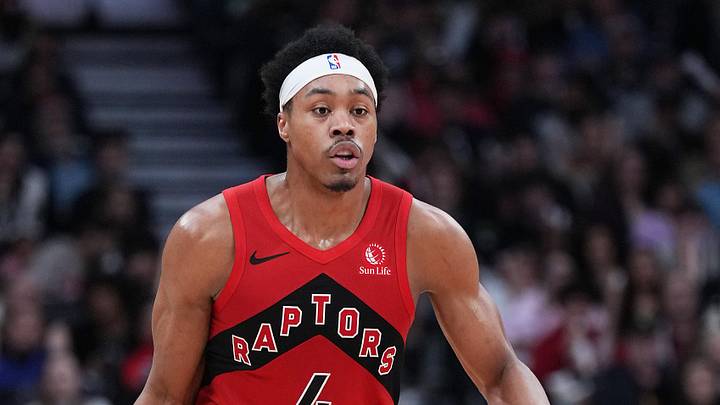
The narrative surrounding the Toronto Raptors has long been one of “us against the world,” but in the 2025/26 season, that sentiment has moved from a rallying cry to an undeniable reality. As Scottie Barnes continues to evolve into a legitimate franchise cornerstone, a troubling trend has emerged: despite a season of elite-level defensive output, Barnes is being systematically overlooked by the voting bodies that define NBA stardom.
For fans of the Raptors, the frustration is palpable. While the league often talks about parity and global expansion, the reality of media voting—a process dominated by U.S.-based writers and broadcasters—reveals a significant “geographic bias” that continues to penalize players residing north of the border.
The DPOY Discrepancy
The most glaring evidence of this bias surfaced during the end-of-season awards voting. Barnes, who took a definitive step toward superstardom this year by anchoring a playoff-bound Raptors squad with relentless, versatile defense, finished fifth in Defensive Player of the Year (DPOY) voting. While the eventual winner, Victor Wembanyama, was widely viewed as the frontrunner, the rankings of the players between them—Rudy Gobert, Ausar Thompson, and Chet Holmgren—defy conventional statistical logic.
When evaluating defensive impact, few players in the league possess the versatility Barnes displayed this year. Yet, when the ballots were cast, the media panel—which historically favors players on prominent American-based franchises—placed Barnes behind peers whose defensive contributions, while impressive, did not reach the same consistent, game-altering level as the Raptors’ star.
The All-Defensive Team Paradox
The snub became even more illogical when the NBA All-Defensive teams were announced. By finishing fifth in DPOY voting, logic dictates that Barnes should have been a lock for the All-Defensive First Team. In a five-man selection, being the fifth-best defender in the league should earn a First Team nod.
Instead, voters opted to elevate other names, leaving Barnes as the only player in the top five of the DPOY race to be excluded from the First Team. This wasn’t just a difference of opinion; it was a mathematical anomaly that suggests a lack of attention being paid to the Raptors’ nightly performances. It is difficult to look at that outcome and conclude anything other than the fact that playing for the NBA’s only Canadian franchise remains a significant hurdle for individual recognition.
The American Bias in Media Voting
The issue is systemic. Because the award panels are heavily skewed toward American media members who focus primarily on U.S. markets, the “Toronto Effect” is real. Players on teams like the Knicks, Lakers, or Celtics receive significantly more airtime and, by extension, more favorable narratives. Barnes, despite his high-intensity play and his status as a fan-voted All-Star, finds himself in a position where he has to be twice as good as his American counterparts just to get half the recognition.
This bias does more than just hurt individual trophy cabinets; it threatens to stall the perception of Barnes as a true superstar. In an era where legacy is built on All-NBA and All-Defensive honors, these snubs have long-term implications for how Barnes will be remembered.
If Scottie Barnes were playing in a major U.S. media hub, he would be a perennial First Team selection. Instead, he remains the league’s most consistent defensive force fighting for a seat at the table. For the Raptors, the mission remains clear: keep winning, keep playing elite defense, and eventually, the recognition will become impossible for even the most biased voters to ignore.