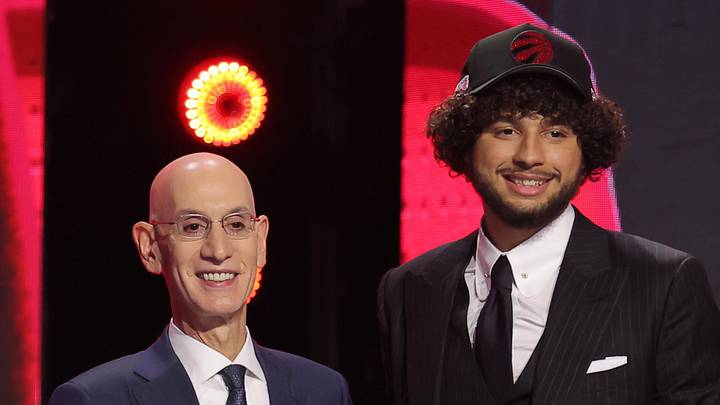
The Toronto Raptors have finally spoken, and their 2026 NBA Draft strategy has left the fan base buzzing with a mixture of confusion, curiosity, and cautious optimism. After weeks of speculation, draft experts wondering if Toronto would pivot to a “win-now” roster construction, the front office stayed true to their roots. By selecting Allen Graves at No. 19 and Jaden Bradley at No. 50, the Raptors have doubled down on their signature “Vision 6’9” philosophy—a commitment to length, versatility, and the elusive, high-value two-way player.
Why Another Forward? The Bobby Webster Strategy
The most common question echoing across social media following the draft was simple: “Why did the Raptors take another forward in Graves?”
Executive VP Bobby Webster, fresh off a well-deserved promotion, addressed the skepticism during a post-draft press conference with a calm, analytical confidence. He explained that the team’s strategy remained unwavering: identify the “best available two-way player,” regardless of positional surplus. Webster cautioned against the “trap” of drafting solely for immediate roster fit in the first round.
”I think sometimes you get into a little bit of a trap if you try to take for fit in the first round,” Webster noted. Instead, the Raptors leaned into their proprietary analytical models. When asked about the specific data behind the Graves pick, Webster offered a candid, albeit humorous, admission that the team’s scouting department had leveraged advanced metrics to bridge the gap between human observation and statistical potential. By trusting the data, the Raptors believe they’ve secured a player whose ceiling far outweighs his current draft slot.
The Jaden Bradley Wildcard: Competition Breeds Success
While Graves represents the “Vision 6’9” ethos, the selection of guard Jaden Bradley in the second round served as a different kind of statement. Dan Tolzman, the organization’s lead talent evaluator, painted a picture of a rookie who is “a very accomplished player” despite never having stepped foot on an NBA court.
The Raptors haven’t decided yet if Bradley will take a spot on the main roster or start his career on a two-way contract, but the intent is clear: he is here to push the incumbents. In a backcourt already crowded with talent like Immanuel Quickley and Jamal Shead, Bradley isn’t expected to step aside. Tolzman described the move as a deliberate “motivational strategy,” forcing veterans to defend their minutes against a hungry, dogged defender. By adding a guard who prides himself on his work ethic and defensive intensity, the Raptors are actively offloading some of the heavy-lifting ball-handling duties while creating a pressure-cooker environment in training camp.
Is 2019 the Blueprint for 2026?
This draft wasn’t just about adding players; it was about reaffirming an identity. Since their championship run in 2019, the Raptors have searched for the right mix of grit and skill that made them world-beaters. By drafting Graves and Bradley, Toronto is signaling that they haven’t abandoned their core belief in positionless, defensive-minded basketball.
They are betting that in a league shifting toward smaller, faster lineups, the team that owns the most switchable, “dogged” defenders will ultimately dictate the tempo of the game. Fans may be looking for flashy, high-scoring additions, but the front office is playing the long game, betting that an influx of high-IQ, two-way competitors will return Toronto to the upper echelons of the Eastern Conference.
The Raptors’ draft wasn’t designed to win the news cycle; it was designed to win the war of attrition that is the NBA season. The “Vision 6’9” experiment is back, and if Webster’s data is as accurate as the team hopes, they may have just found the next chapter of Raptors excellence.