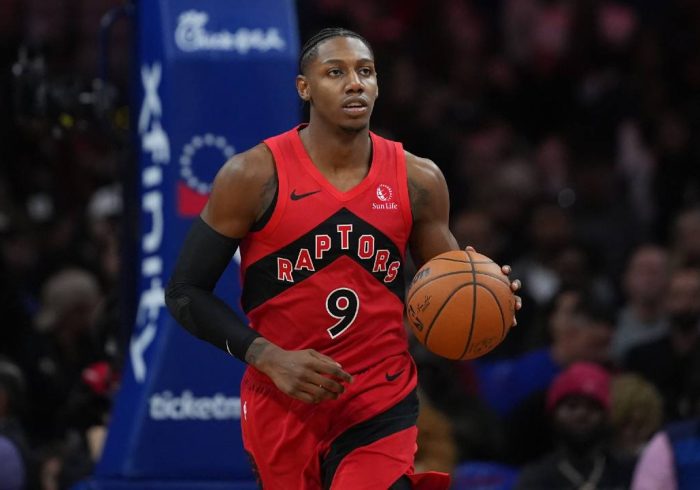
As the Toronto Raptors gear up for an ambitious 2026-27 NBA season, the front office faces two glaring roster weaknesses: finding a reliable anchor at the center position and injecting consistent floor spacing into the lineup. Naturally, these needs have sparked widespread speculation across fan forums and media outlets, with many pointing to veteran big man Myles Turner as the ultimate plug-and-play solution.
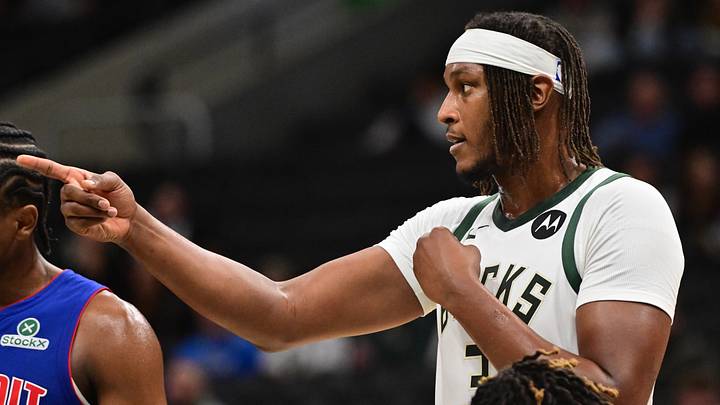
Following the Milwaukee Bucks’ transition into a post-Giannis Antetokounmpo era, Turner’s name has frequently popped up in trade conversations. On paper, the appeal is obvious. Armed with a career 36.5 percent mark from beyond the arc and a reputation as a lethal shot-blocker, Turner seems like an intriguing fit alongside franchise cornerstones Scottie Barnes and Kawhi Leonard, and an immediate upgrade over Jakob Poeltl.
However, a closer look reveals that trading for the 30-year-old center could easily backfire and become a complete nightmare for Toronto’s front office.
The Red Flags: Why Turner Isn’t the Answer
While Turner’s floor-spacing ability looks appetizing on surface-level stat sheets, his current career trajectory tells a much more concerning story. Now entering his 30s, Turner is coming off a brutal down year—logging his worst scoring, rebounding, and shot-blocking numbers since his rookie season.
Compounding those regression concerns is his massive financial commitment. Turner is currently locked into a hefty three-year contract worth a staggering $83.5 million, a deal that threatens to age far worse than Poeltl’s current agreement if his production continues to slide.
Furthermore, Turner has never been a natural, high-volume rebounder, holding a modest career average of just 6.6 boards per game. Last season, the Raptors finished a dismal 24th in rebounds per game, and swapping Poeltl for Turner would likely exacerbate that glaring weakness rather than fix it.
While Turner historically thrived next to a physical rebounding anomaly like Giannis Antetokounmpo—who could clean up the glass and mask Turner’s shortcomings—Toronto’s star forwards like Scottie Barnes play a different brand of basketball and don’t routinely crash the boards with the same brute force. Taking on an expensive center who struggles to secure defensive rebounds is a risky gamble the Raptors simply don’t need to take.
Sticking with Jakob Poeltl Makes More Sense
It is completely fair to acknowledge that Toronto needs an upgrade or a tactical evolution in the middle. But rushing into a deal—likely centered around shipping out Poeltl alongside second-round draft capital—ignores the upside of what is already in the building.
Poeltl deserves a proper, uninterrupted chance to prove himself in this new era of Raptors basketball. If he can bounce back to his standard form—consistently chipping in with 10-plus points, nine rebounds, and a couple of assists nightly—Toronto’s overall ceiling remains significantly higher than it would with an expensive, non-rebounding stretch big.
Additionally, Toronto’s elite forward combination of Barnes and Leonard naturally creates gravity and opens up wide-open looks for surrounding role players. The team doesn’t necessarily need a max-salary center who struggles with the fundamentals of rebounding just to space the floor.
The Verdict for Bobby Webster
General manager Bobby Webster shouldn’t hesitate to explore the trade market if major roster adjustments are required once the season gets underway. But if the choice comes down to buying high on a regressing Myles Turner or giving Jakob Poeltl and the current roster a fair shake, the decision should be crystal clear.
The Raptors have put together a talented, cohesive group that deserves the benefit of the doubt. For now, steering clear of the Myles Turner trade trap is the smartest play Toronto can make!