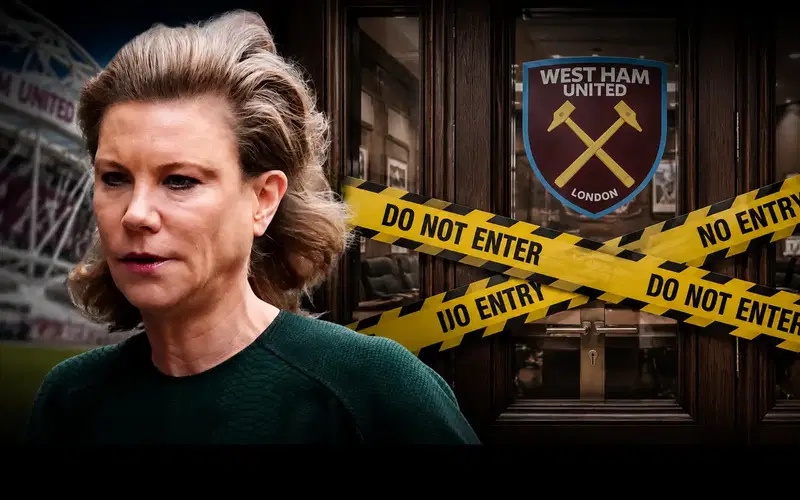
David Sullivan just made a quiet move that’s thrown West Ham’s boardroom drama wide open. But buried in the small print is a rule that could determine everything — and it all comes down to one crucial shareholder
West Ham’s ownership saga has taken another twist — and, in typically dramatic fashion, this one is unfolding with all the subtlety of a soap opera cliffhanger.
Sullivan’s Move That Restarted the Rumour Mill
David Sullivan has quietly increased his shareholding to 40%, a move that’s sent fans and pundits alike into a frenzy of speculation. The latest suggestion doing the rounds is that Sullivan could now be open to selling that entire stake.
But here’s the catch: even if Amanda Staveley remains interested in a takeover, and even if Sullivan agrees to sell, she would still need to secure Tripp Smith’s holding as well just to reach a controlling stake in the club.
The Rule Nobody’s Talking About: Pre-Emption Rights
Before any takeover talk can really be understood, there’s one crucial mechanism at play: pre-emption rights. In simple terms, this is a “first refusal” system — if any shareholder wants to sell, existing shareholders get the opportunity to buy those shares before any outside party can.
This exact rule already played a role earlier this year during the sale of Vanessa Gold’s stake, so it’s far from theoretical — it’s already shaping West Ham’s boardroom reality.
How It Applies to Sullivan’s Situation
Here’s where it gets genuinely fascinating:
- Sullivan’s increased 40% stake gives him a much larger chunk of shares he could now sell
- If he does, every existing shareholder gets first refusal, including Daniel Křetínský (46%), Tripp Smith (11%), and Jacub Havrlant
Crucially, this means Křetínský could simply choose to buy up as many of those available shares as he wants — regardless of any offer Staveley puts on the table. Any bid Staveley makes effectively sets the price, but it doesn’t guarantee her the shares.
Havrlant’s position adds another layer of intrigue too. As someone entitled to a small percentage under pre-emption rules, his involvement could actually help Křetínský tighten his grip on the club even further, rather than opening the door for Staveley.
The bottom line: Staveley can only reach a controlling 51% stake if the other shareholders allow it.
What Happens Next?
Sullivan’s move has undeniably reopened the door to takeover speculation, with Staveley’s name firmly back in the conversation. But plenty remains unresolved:
- Will Staveley push forward, or walk away entirely?
- Will Křetínský use his pre-emption rights to buy more shares and consolidate control?
- Will Sullivan ultimately cash out completely, or continue playing the long game?
One Thing Is Certain
Whatever happens next, West Ham’s ownership drama shows no sign of slowing down. With pre-emption rights now firmly in the spotlight, the real power in this saga may not lie with whoever makes the biggest offer — but with whoever the existing shareholders choose to let in.