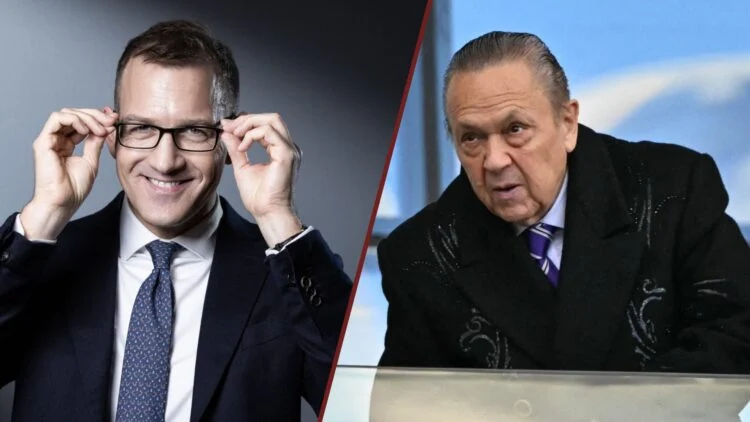
The corridors of power at West Ham United are currently echoing with a very loud, very uncomfortable truth. Even though her ambitious takeover bid was successfully blocked by a clever pre-emption maneuver, former Newcastle co-owner Amanda Staveley is refusing to fade quietly into the background. Instead, she has just delivered a parting shot that resonates deeply with the terraces—sending an unmistakable message to majority stakeholder Daniel Kretinsky and co-owner David Sullivan that could define the next chapter of the club’s turbulent ownership saga.
A Boardroom Blockade and Mounting Fan Frustration
To fully appreciate the weight of Staveley’s intervention, one must look at the fragile state of affairs in East London. Following West Ham’s painful relegation, the boardroom has become a focal point of intense scrutiny. David Sullivan resigned from his official position on the board, but he and Czech billionaire Daniel Kretinsky managed to consolidate their positions by increasing their respective stakes.
By executing a pre-emption process that thwarted Staveley’s attempts to acquire both Vanessa Gold’s 25.1 percent holding and Sullivan’s massive 38.8 percent block, Kretinsky emerged as the club’s leading shareholder. Sullivan, meanwhile, retained a formidable 40 percent stake, much to the dismay of a fanbase that has spent years actively protesting against his stewardship.
Compounding this frustration is the heavy skepticism surrounding Kretinsky’s long-term vision. Despite previously assuring the public that he would bankroll Nuno Espírito Santo’s squad rebuild to secure an immediate Premier League return, supporters have watched with growing anger as the club generated nearly £200 million in player sales while operating with a meager £40 million net spend.
Coupled with the Fan Advisory Board’s ongoing demands for absolute transparency regarding the club’s long-term strategy—particularly concerning the future of the London Stadium, a venue Staveley’s consortium had grand plans to redevelop into a football-first ground—the pressure on the current hierarchy has never been higher.
Staveley Drops the Hammer: Fans Aren’t Just Consumers
Seizing on this climate of uncertainty, Staveley took to Bloomberg to lay out a philosophy of football ownership that stands in stark contrast to the corporate detachment often displayed by modern executives. Amplified heavily on social media by her partner, Mehrdad Ghodoussi, Staveley’s message was a direct reminder to Kretinsky and Sullivan about what actually drives the value of a football club.
“For me, the most important thing owners need to understand is that football clubs aren’t ordinary businesses,” Staveley told Bloomberg, driving her point home with surgical precision. “Supporters aren’t customers. They’re the custodians of a club’s history, its identity and its culture, and that’s where the value comes from in the first place.”
She went on to issue a stark warning about the dangers of alienating the matchgoing faithful through unbridled commercialization and poor communication: “Of course clubs have to grow revenues to stay competitive. But that can’t come at the expense of the people who built the atmosphere, the loyalty and the sense of belonging that make these clubs what they are. Price them out and you lose something you can’t buy back.”
The Ball Is Now in Kretinsky and Sullivan’s Court
For West Ham supporters who have endured years of disjointed communication, broken promises, and bitter protests, Staveley’s words felt like a breath of fresh air. They gave a voice to a fanbase that has long felt ignored by the multimillionaires pulling the strings behind the scenes.
More importantly, Staveley’s continued, lingering interest in the club acts as a constant shadow over the current ownership. Kretinsky now faces a defining choice. With the supporters crying out for stability, transparency, and a genuine seat at the table, the Czech billionaire has the ultimate opportunity to step up, open the books, and prove that his stewardship can deliver a modern, fan-centric vision for the Hammers.
If he and Sullivan choose to ignore the sentiment echoing from the stands, they do so at their own peril. As Staveley so eloquently reminded the footballing world, once the loyalty and trust of a passionate fanbase are lost to corporate indifference, no amount of money in the world can ever buy them back.