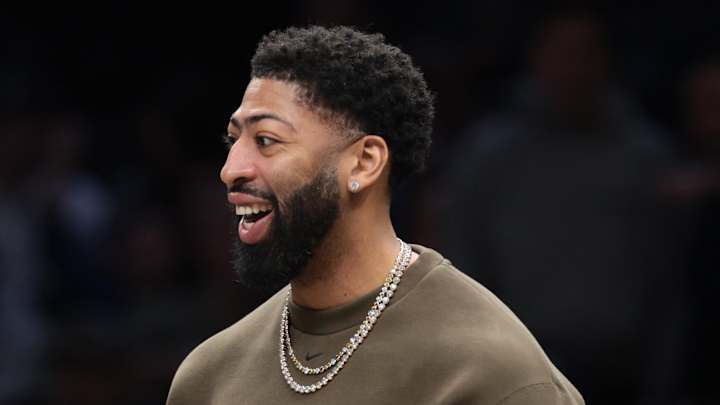
For years, the idea of in a jersey felt like an inevitable pairing—one of those blockbuster moves that could tilt the balance of power in the NBA. Back then, it made perfect sense. Boston needed a dominant big man, and Davis was firmly in his prime.
Fast forward to 2026, and that same idea feels far more complicated.
While Davis remains one of the most talented big men in basketball, the context around him—and around Boston—has completely changed. What was once a dream scenario now carries far more risk than reward.
Boston’s Frontcourt Isn’t the Problem Anymore
Coming into the season, the Celtics’ biggest concern was their frontcourt depth. That concern has quietly disappeared. Internal development and smart roster decisions have turned a perceived weakness into a strength.
Players like Neemias Queta and Luka Garza have stepped up in meaningful ways, while has shown flashes of being a reliable fit. The group may not be star-studded, but it’s functional, productive, and—most importantly—consistent.
That matters more than ever for a team with championship aspirations.
Because when a roster is already working, making a high-risk move becomes far harder to justify.
The Talent Is Still There—But So Are the Risks
There’s no denying Davis would instantly become Boston’s most talented big man—arguably their best since . On pure ability alone, the upgrade is obvious.
But the NBA isn’t played on paper.
Davis’ current situation introduces two major concerns: durability and cost.
Injuries have followed him throughout his career, and as he’s gotten older, those concerns haven’t gone away—they’ve intensified. Committing to a player with a history of missing games is always a gamble, especially for a team trying to maintain title contention over a full season.
Then there’s the financial side.
Davis is set to earn nearly $60 million, placing him alongside elite names like and in terms of salary. The difference? Those players are still firmly in their peak, while Davis is no longer consistently performing at that same tier.
Paying superstar money for uncertain availability is the kind of move that can quietly derail a contender.
Continuity vs. Chaos
One of Boston’s biggest strengths right now is continuity. The system works, the roles are defined, and the chemistry is evident on the court.
Adding Davis would disrupt that balance.
Even if he performs at a high level, integrating a high-usage, injury-prone star mid-structure comes with challenges. Rotations shift, touches change, and the rhythm that carried the team can be lost.
And for what?
A marginal upgrade in talent that comes with a significant increase in risk.
Desperation Drives Moves Like This—Boston Isn’t There Yet
Trades like this typically happen when a team feels it’s one piece away—or when it’s running out of options.
The Celtics are in neither situation.
They’re competitive, balanced, and still evolving. Other teams around the league may view Davis as a necessary gamble. Boston, at least for now, has the luxury of patience.
That could change. Injuries, playoff shortcomings, or unexpected regression might force tougher decisions down the line. But as things stand, making a move for Davis would feel more reactive than strategic.
A Move That Missed Its Moment
Timing is everything in the NBA.
There was a time when pairing Anthony Davis with Boston’s core would have been a franchise-defining move. That time has passed. What remains is a version of the idea that no longer aligns with the team’s needs or trajectory.
Davis is still a big name. Still a big talent.
But for the Celtics, he’s no longer the right answer.
And sometimes, the smartest move a contender can make… is the one they choose not to make.