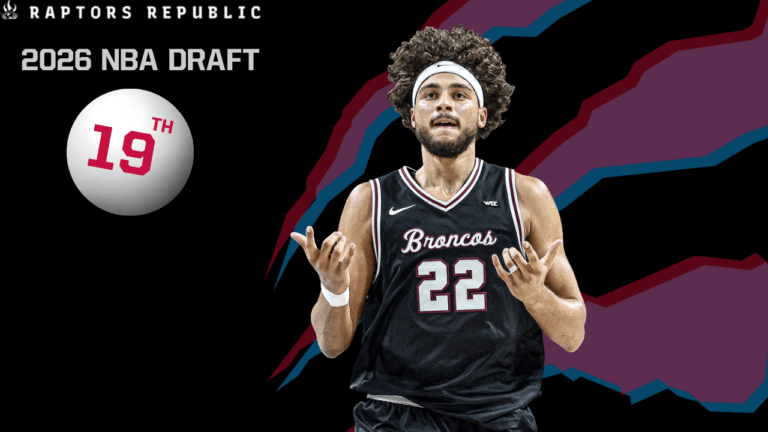
The 2026 NBA Draft has come and gone, and the Toronto Raptors’ selection of Santa Clara forward Allen Graves at No. 19 has triggered a seismic shift in the team’s offseason strategy. While pundits initially questioned the move—pointing to the glaring lack of depth at the guard position following Immanuel Quickley’s injury-plagued season—the pick was far from a mistake. In reality, it was a tactical masterstroke that has fundamentally altered the Raptors’ leverage in the upcoming free agency market.
The “Graves Effect”: Why Priorities Have Changed
Heading into the draft, the Raptors were in a tight spot. With long-term contracts clogging the cap, the front office was staring down the barrel of a difficult decision: likely having to trade Gradey Dick just to secure the funds necessary to re-sign breakout contributor Sandro Mamukelashvili. It was a classic “roster vs. salary” dilemma.
Enter Allen Graves. By selecting the versatile, floor-spacing forward, the Raptors have effectively rendered the re-signing of Mamukelashvili a luxury rather than a necessity. Graves is projected to step into that exact “stretch-big” role, offering superior defensive upside and the benefit of a cost-controlled rookie contract. This isn’t just a roster swap; it’s a financial liberation. By removing the need to overpay for veteran bench depth, the Raptors have suddenly opened up the capital required to chase the one thing they actually need: an elite backcourt upgrade.
Addressing the Backcourt Blind Spot
Let’s be honest: Immanuel Quickley and Jamal Shead proved they are the real deal, but one hamstring issue was all it took to reveal the cracks in Toronto’s foundation. Quickley’s scoring punch and Shead’s defensive grit were essential, and while Scottie Barnes did a heroic job covering for the team’s playmaking deficiencies, relying on a forward to run the offense is a dangerous gamble in the playoffs.
The Raptors need more than just hope; they need production. They have promising talent like Alijah Martin and A.J. Lawson developing in the wings, but if Toronto wants to graduate from “first-round casualty” to “contender,” they cannot rely on developmental projects to solve rotation-level problems.
The Target: Going After a Proven Scorer
With the financial flexibility created by the Graves pick, the Raptors are now positioned to be aggressive. They don’t necessarily need to swing for the fences on a blockbuster trade for a superstar like Donovan Mitchell or Jamal Murray to make a significant impact. What they need is a plug-and-play guard who can space the floor, alleviate the pressure on Barnes, and ignite the offense when the starters hit the bench.
A player like Coby White—a proven, dynamic offensive threat—is exactly the type of target that now becomes viable. By securing a reliable, scoring-focused guard, the Raptors would instantly solve their biggest tactical imbalance.
The Verdict: A Masterclass in Asset Management
Critics often focus on what a team didn’t do in the draft—”they didn’t pick a guard!”—but that misses the broader picture. The Raptors’ front office wasn’t drafting for immediate desperation; they were drafting for roster flexibility. By securing a high-upside forward who fits the team’s defensive identity, they have gained the leverage to attack free agency with a clear, singular focus.
Toronto is no longer backed into a corner by their own salary cap. They have successfully reshuffled their assets, maintained their youth, and put themselves in the driver’s seat for the next phase of the offseason. If the front office plays their cards right, the selection of Allen Graves won’t just be remembered as a draft pick—it will be remembered as the move that unlocked the final piece of the Raptors’ championship puzzle.